
French Drains in Houston: Why Most Yards Need an Area Drain
If you searched for French drains in Houston, you’re in the right place — but what you’re picturing may not be what your yard needs. A lot of people use “French drain” as the name for any yard drain. What many of them actually need is an area drain. Drain X Perts is a yard-drainage company in Alvin. We do outdoor drainage only, and we will tell you honestly which system belongs on your property.
Call (832) 776-8003 for a free on-site estimate.
A lot of people say French drain when they mean area drain
A French drain is a gravel-filled trench with a perforated pipe. It is meant to collect water that soaks into the soil and slowly moves through it. An area drain, with catch basins and solid pipe, picks up water sitting on the surface and carries it off the property, usually to the street or a storm drain.
French Drain
- A gravel-filled trench with a perforated pipe
- Meant to collect water that soaks into the soil and slowly moves through it
- Depends on infiltration — and clay soil absorbs water very slowly
- Makes sense only in limited cases: crawl spaces / pier-and-beam foundations, and under flower beds
Area Drain
- Catch basins at the low spots, connected with solid pipe
- Picks up water sitting on the surface and carries it off the property
- Usually discharges to the street or a storm drain
- What most Houston clay yards actually need
Those are two different systems. Because “French drain” is the term most homeowners type into Google, we want that search to land here, so we can explain the difference before someone pays for the wrong drain.
For the full explanation, including where French drains do and do not belong, read our guide at frenchdrainsinhouston.com.
Why French drains don’t work well in Houston clay
Houston-area yards are full of clay, which has the lowest infiltration rate of any common soil. A French drain depends on water soaking in and finding the perforated pipe. In clay, that happens too slowly. Our storms dump a lot of water in a short time, and a trench that has to wait on infiltration cannot keep up. Water sits, the yard stays wet, and the system you paid for does not do its job.
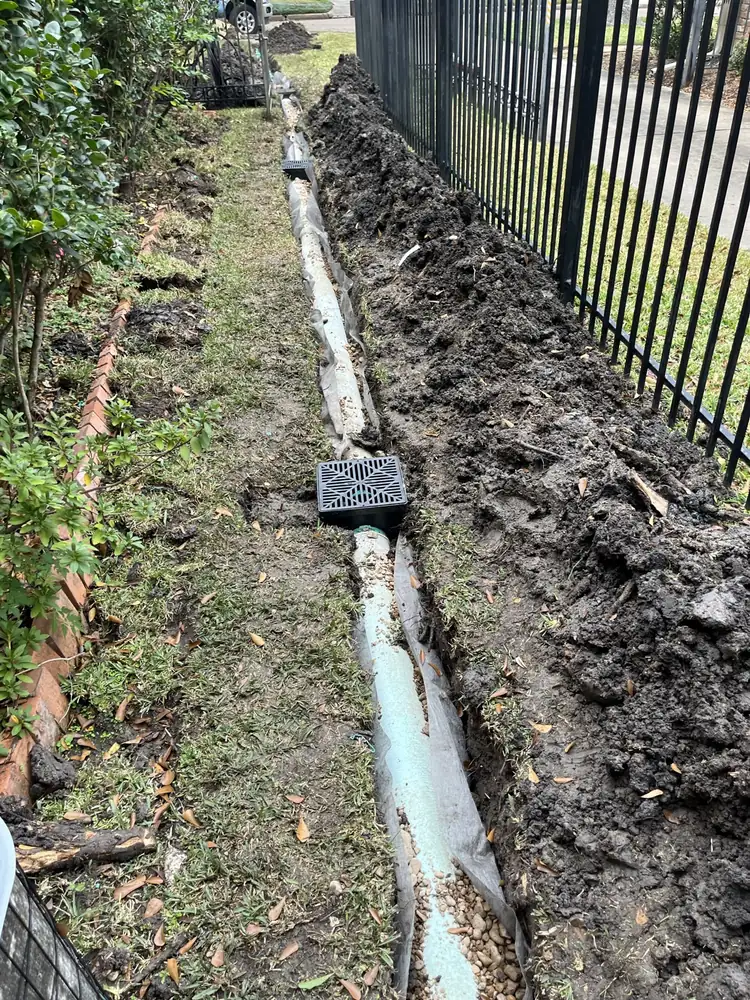
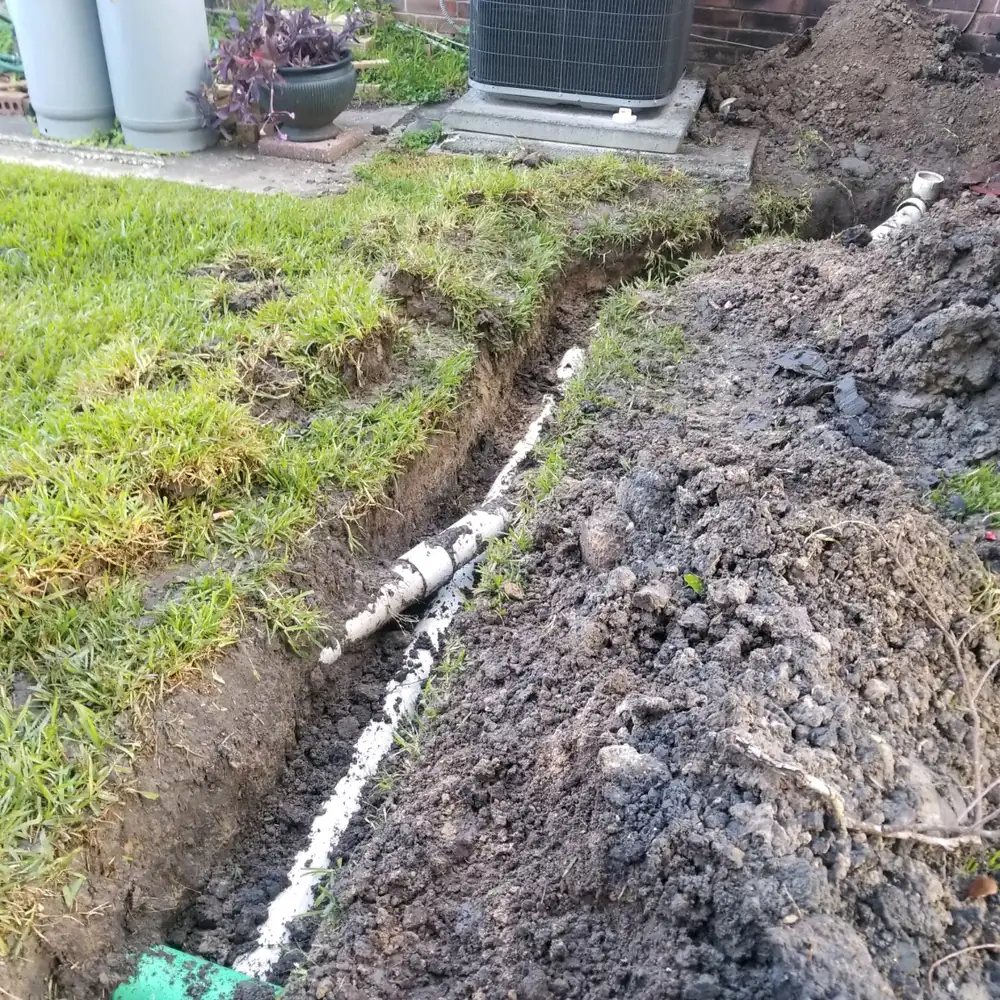
That is why we so often get called to pull out a “French drain” that never worked — cheap corrugated pipe in a gravel trench — and replace it with a system that actually moves water away from the house and out to the city’s drainage.
When a French drain does make sense
French drains are not useless. They are just the wrong tool for most Houston yards. They do make sense in a few situations:
- Crawl spaces and pier-and-beam foundations. If the ground under the home is lower than the surrounding grade, a French drain can keep runoff from getting under the house and damaging the foundation, especially where there is limited access underneath.
- Under flower beds. A French drain under a bed gives excess water a way out so it does not sit in the root ball and cause rot. This is one place they are worth installing, even in clay. If the clay is especially heavy, we also like to remove some of it and add garden soil so the bed can breathe.
If your lot is one of those cases, we will say so and install a French drain the right way: proper pipe, fabric, slope, and an outlet that actually goes somewhere.
What most Houston yards actually need
If you have a typical slab foundation, standing water around the house or in the yard, and a path downhill to the street or a drainage ditch, the better answer is usually an area drain system: catch basins at the low spots, solid pipe, and an outlet to the city’s drainage. Surface water is picked up quickly and moved off the property, instead of waiting to soak through clay.
The same is often true in yards with a lot of trees. French drains hold water at the bottom of the trench, which invites feeder roots. An enclosed area drain with catch basins is usually the more reliable, more cost-effective fix.
We will walk your property and tell you which one you actually need — not which one is easiest to sell, and not simply whatever you typed into the search bar.
How we evaluate and install a drainage system
- We walk the property first. Before we talk about pipe, we look at how water moves across your lot: the slope from back to front, where puddles form, how much of the foundation is showing, and where your gutters and downspouts empty.
- We tell you the right system for your yard. That may be an area drain with catch basins, a French drain in the limited cases above, or a combination.
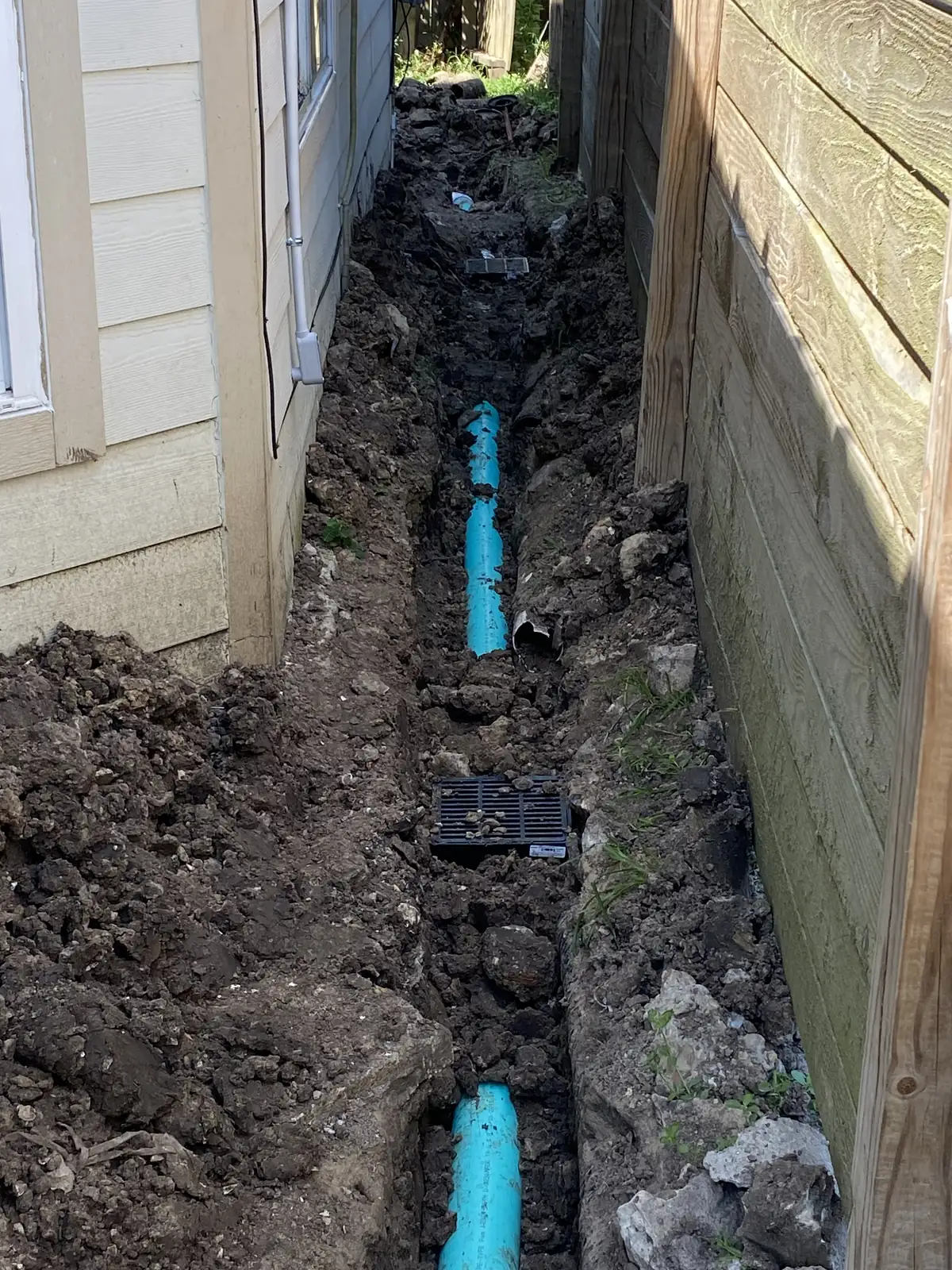
- We use the right pipe. Most homes are well served by 4-inch pipe. For properties that flood, we recommend a 6-inch line, which keeps up with the torrential downpours that overwhelm a 4-inch system.
- We keep the slope correct from start to finish. A drain with flat spots or back-fall holds water and silts up. We set and check the grade along the full run, and we give the water a real outlet.
- We restore your yard. Trenches are backfilled, grass is put back and the site is cleaned up before we leave.
- We stand behind it. Every system comes with our 2-year workmanship warranty. Where a city permit is required, we pull it for you.
Signs your yard needs a drain — whether you call it a French drain or not
- Standing water that lasts more than a day after rain
- Soggy, spongy spots in the lawn or patches of dead grass
- Water pooling against the slab or running under the garage door
- Mulch and soil washing onto patios and sidewalks
- Erosion along fence lines or the side yard
- Downspouts that dump roof water right beside the foundation
Common drainage mistakes we get called to fix
A lot of our calls come from homeowners who already paid for a drain that doesn’t work. The same problems show up again and again:
- The wrong system. A French drain was put in a clay yard that needed area drains and catch basins, because “French drain” is what the homeowner asked for.
- No real outlet. The pipe ends in a flower bed or a pop-up emitter in a flat yard, so the water has nowhere to go and backs up into the trench.
- Flat or uneven slope. Sections that sit level or dip hold water, collect silt and clog over time.
- Pipe that’s too small, or cheap corrugated pipe. A 4-inch line on a property that floods gets overwhelmed in the first big Gulf Coast storm, and thin corrugated “French drains” fail even faster.
- Sump pumps where gravity would work. Pumps need power, maintenance and replacement. We only recommend one when the lot truly can’t drain by gravity.
Doing the job right the first time is always less expensive than tearing out and correcting a drainage system later. If you have a drain that isn’t working, we’ll tell you honestly whether it can be repaired or needs to be redone.
What to expect on installation day
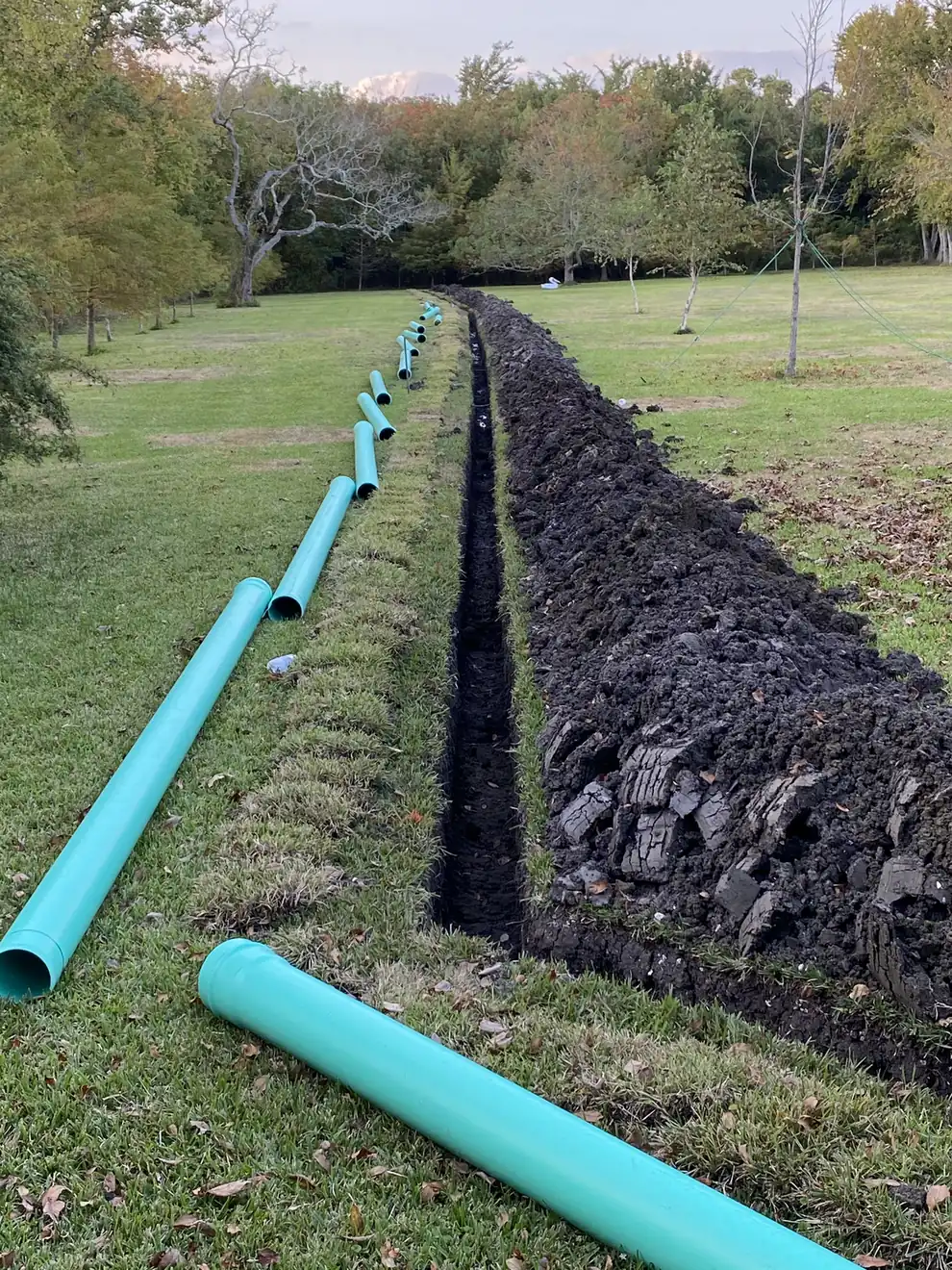
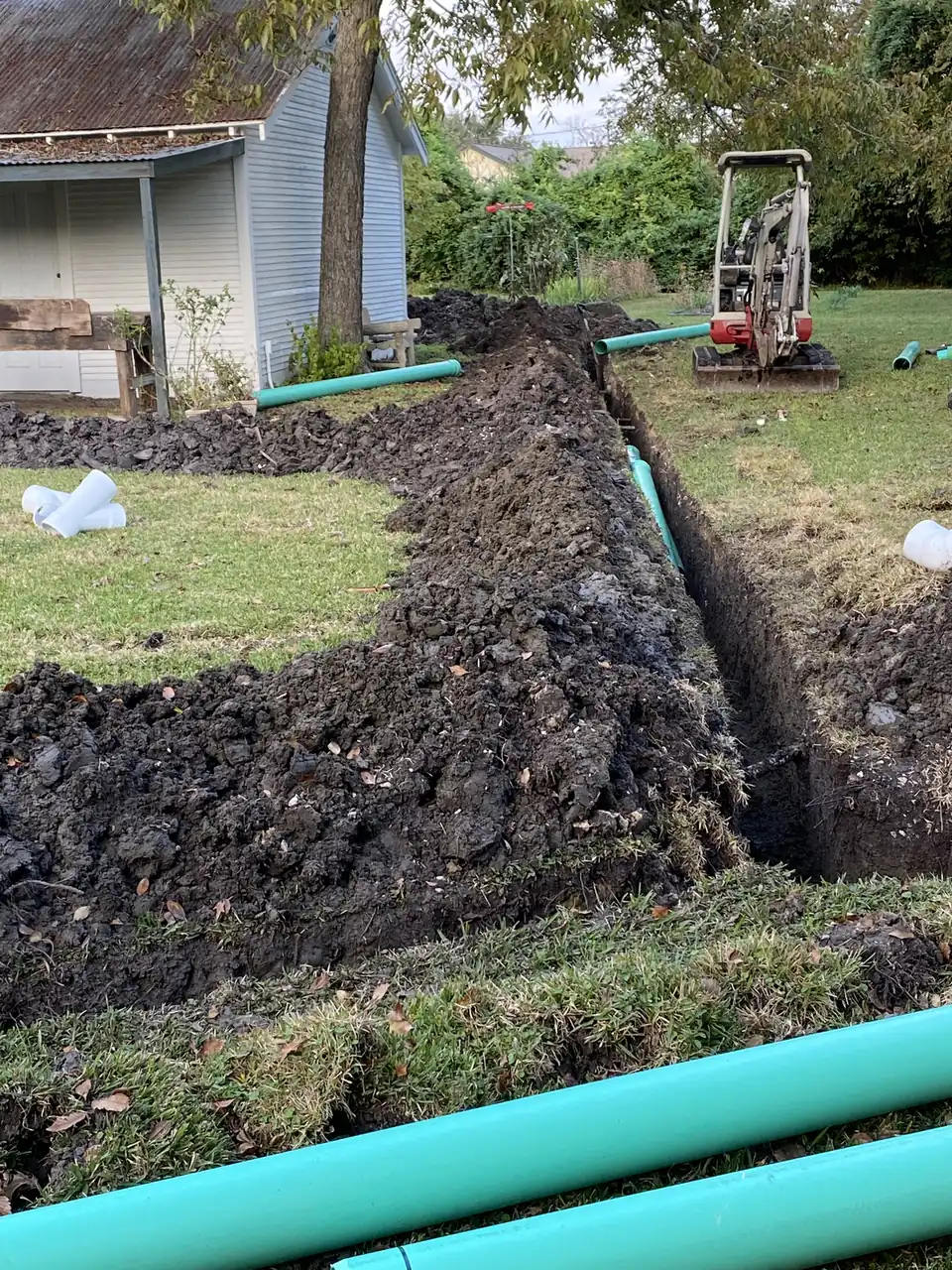
Before work starts, we confirm the layout with you and have underground utilities marked. Our crew digs the trenches, often by hand near beds, slabs and fences, sets the pipe and catch basins to grade, and connects the system to its outlet. Then we backfill, put the grass back and clean up. We’ll walk the finished job with you and show you where everything runs. Most residential jobs take 2 to 3 days, depending on the size of the job. After the first heavy rain, most customers tell us the same thing: the water that used to sit for days is simply gone.
Why Houston homeowners choose Drain X Perts
- Outdoor drainage specialists. We don’t do indoor plumbing or drain cleaning. Yard, landscape and foundation drainage is all we do.
- Experience. More than 25 years experience in the design and installation of landscape drainage systems, with 2,000+ drainage systems installed across Greater Houston. We spend a lot of that time taking out drains that were never the right system for the soil.
- Honest recommendations. We will not install a French drain just because that is what you searched for, if an area drain is what will actually work.
- Honest, on-site estimates. We look at your property and give you an accurate price at the visit.
- A 2-year workmanship warranty on every system. Where a permit is required, we pull it for you.
“They came out to see our property within 24 hours of first contact and I had a quote before they left. That alone tells you they care about service. They finished the work within two business days and didn’t leave a trace. Highly recommend!” – Google review
Drainage installation across Greater Houston
We install yard drainage throughout Houston and the surrounding communities, including Pearland, Alvin, Manvel, Friendswood, League City, Missouri City, Sugar Land, Katy, The Heights, The Woodlands, Pasadena, Deer Park, La Porte, Webster, Seabrook, Dickinson, Texas City, Lake Jackson, Angleton and Rosharon. If you’re in Greater Houston and not sure whether we cover your area, just call.
French drain FAQ
Is an area drain the same as a French drain?
No, and this is the mix-up we see all the time. A French drain is a perforated pipe in a gravel trench, meant to collect water moving through the soil. An area drain uses catch basins and solid pipe to pick up water on the surface and carry it away. Most people who search “French drains” in Houston are describing standing water, and that is usually an area-drain job.
How much does a drainage system cost in Houston?
It depends on the length of the run, the depth, how many catch basins are needed, where the water can be discharged, and how much of the yard has to be restored. Every lot drains differently, so we don’t quote from a price list. We come out, evaluate your property and give you an accurate estimate at no charge.
How long does installation take?
Most residential jobs take 2 to 3 days, though it depends on the size of the job. Larger properties or systems with several catch basins can take longer. We’ll give you the schedule with your estimate.
Will a French drain work in Houston clay soil?
Not well. French drains rely on water soaking into the soil and finding the pipe. Clay has a very low infiltration rate, and Houston storms drop water faster than that soil can absorb it. For standing water in a typical Houston yard, an area drain with catch basins is usually the system that works. French drains do make sense in more limited cases, such as crawl spaces and pier-and-beam foundations, or under flower beds. We will tell you which one your yard needs. For a deeper explanation, read our guide at frenchdrainsinhouston.com.
Where does the water go?
Usually to the street curb or a storm drain, through solid pipe. We plan the outlet during the evaluation so the water leaves your property instead of ending up in a flower bed or your neighbor’s yard.
Do I need a permit or HOA approval?
Some cities and HOAs require a permit or approval for drainage work. Where a permit is required, we pull it for you.
Can a drain protect my foundation?
Keeping water from collecting along the slab is one of the best things you can do for a foundation in Houston’s expansive clay. An area drain or, in the right situation, a French drain, combined with downspout drainage, moves that water away. It won’t repair existing foundation damage; that’s a job for a foundation repair company.
Will installation tear up my yard?
There will be trenches while we work, but we backfill them, replace the sod we removed and clean up before we leave. Within a few weeks most lawns grow back over the lines.
Is there a warranty?
Yes. Every drainage system we install comes with our 2-year workmanship warranty.
Do you clean indoor drains or do sewer work?
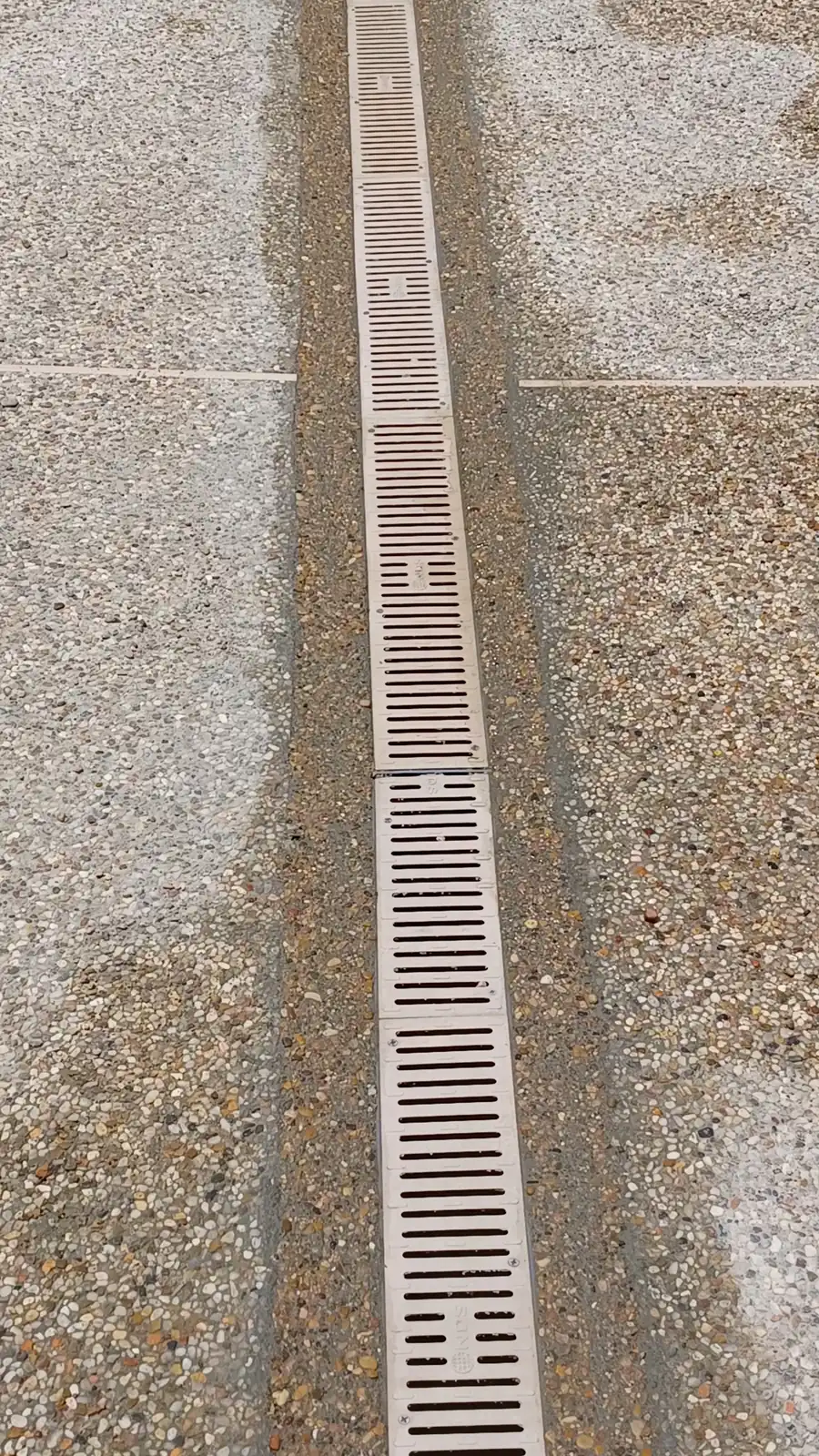
No. Drain X Perts does outdoor drainage only: area drains, catch basins, channel drains, downspout drainage, yard sump pumps, and French drains in the situations where they actually belong.
Get a free drainage estimate
Tired of a yard that floods every time it rains? Call Drain X Perts at (832) 776-8003 or request an estimate on the contact page. We’ll walk your property, explain whether you need an area drain or a French drain, and give you an honest quote on the spot.
Drain X Perts, 626 County Road 948A, Alvin, TX 77511, serving Greater Houston.